We run BFA out of Cincinnati — but we serve clients well outside Hamilton County. And when a local competitor in Columbus, Dayton, or Lexington searches for a marketing partner, we want to show up. Not with a fake address plastered on a rented mailbox. With a legitimate, searchable, trustworthy presence that earns us the click.
If your business serves customers at their location — or can work remotely — you don't need a physical office in every market you want to win. What you need is a deliberate strategy. Here's ours.

Who this is for
This playbook is for service-area businesses (SABs) — contractors, consultants, agencies, cleaners, landscapers, IT providers, and anyone else who goes to the customer rather than having the customer come to them. The tactics work whether you're trying to break into one new city or build a presence across an entire region.
Not applicable if you have a customer-facing storefront — for that, get a real local address.
6 ways to own a local market remotely
Set Up a Service-Area Google Business Profile
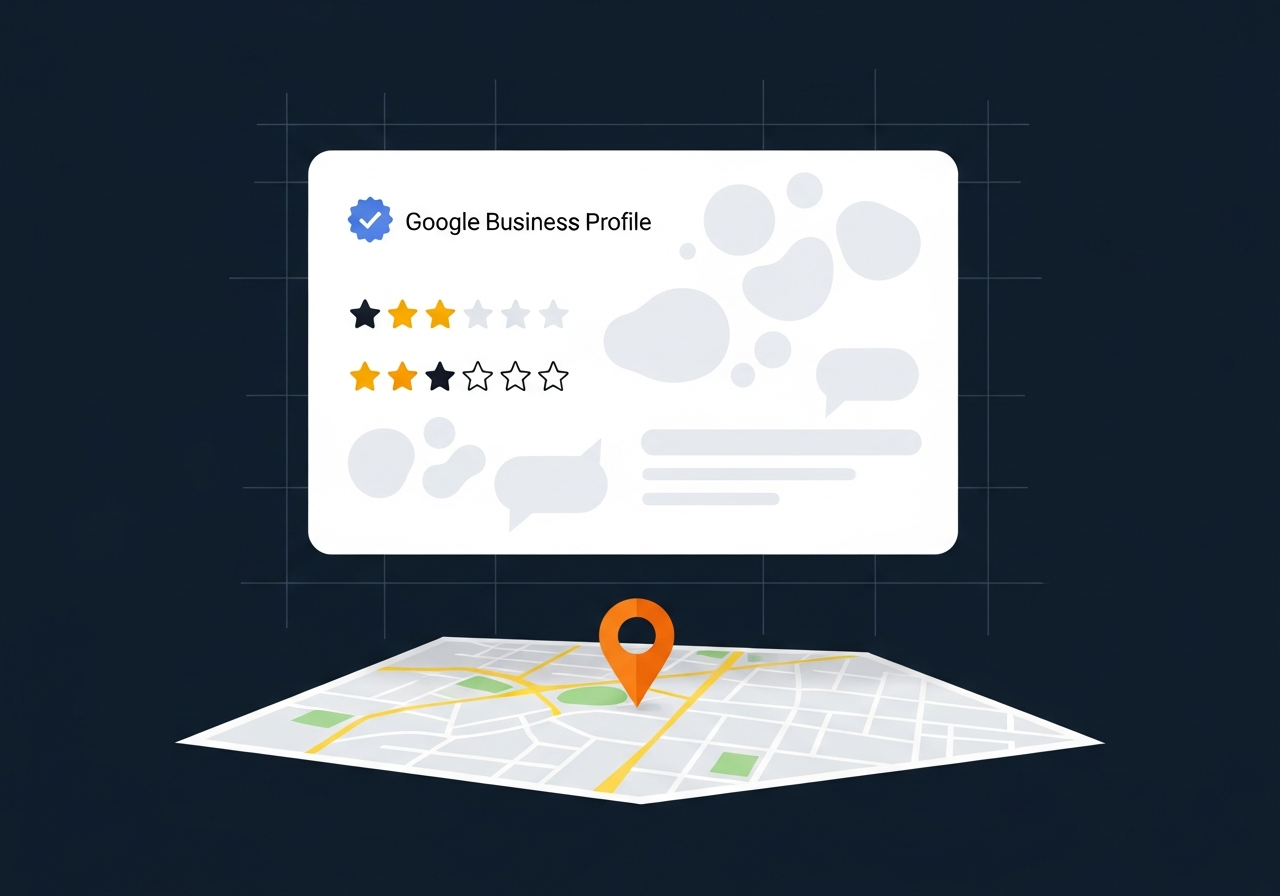
You don't need a storefront. Google lets you create a Business Profile as a "service-area business" — hiding your home address while still showing up in local map results for every city you serve. Claim it, verify it, and fill out every field. This is the single highest-leverage move for a location you don't physically operate in.
Pro tip: Add each target city to your service area list. GBP will factor this into which local search results you appear in.
Build a Dedicated Location Landing Page
Create a page on your website specifically for each target market — e.g., /digital-marketing-columbus-oh. Use the city name naturally in the H1, title tag, and body copy. Include a brief section on why you serve that area, what local clients say, and what makes the market unique. Thin, duplicated pages don't work — each one needs real substance.
Pro tip: Embed a Google Map showing your service area, not a fake address. It signals legitimacy to both users and Google.
Accumulate Reviews That Name the Location
Reviews mentioning a city or neighborhood function as local signals. Ask customers from your target market to mention their location when they leave a review. "Great results for my Columbus roofing company" does more SEO work than a generic five-star review. The velocity and recency of reviews matters — make review generation a consistent process, not a one-time push.
Pro tip: Use a review request tool that sends a direct link to your GBP review form. Friction kills follow-through.
Publish Hyperlocal Content
Write blog posts and guides that are genuinely useful to businesses in your target city. Cover local business trends, area-specific challenges, or breakdowns of what competitors in that market are doing wrong. This builds topical authority for location-based queries and gives local publications and directories something worth linking to.
Pro tip: Mention real local landmarks, neighborhoods, or events. Generic "City + Service" content is invisible. Specific content ranks.
Get Listed in Local Directories & Earn Local Links
NAP consistency (Name, Address, Phone) across the web reinforces your local authority. For a service-area business, list yourself in city-specific directories, chambers of commerce, and industry associations in your target market. Even one link from a respected local source — a newspaper, a business association, a well-known local blog — can move the needle significantly.
Pro tip: The citation should use your real business address (or service area designation), consistent with what's on your GBP. Inconsistencies confuse Google and dilute your authority.
Run Geo-Targeted Paid Ads
Organic takes time. While you're building authority, use Google Local Service Ads or a tightly geo-targeted Google Ads campaign to appear at the top of search results in your target location. You can set a radius of a few miles around any city center — no local address required. Layer in site retargeting so anyone who clicks your ad sees your name again on every site they visit afterward.
Pro tip: Google Local Service Ads show a "Google Guaranteed" badge and charge per lead, not per click. They outperform standard search ads for many service businesses.
Your quick-win checklist
Verify a service-area GBP for each target city
Create a dedicated landing page per location
Ask clients from each city to mention the location in their review
Build one quality local citation or link per month per target market
Run a geo-targeted Google Ads campaign while organic grows
Publish one piece of hyperlocal content per market per quarter
The honest truth: this takes time
Local SEO in a market you're not physically in is harder than ranking where you are. Google's algorithm has historically favored businesses closer to the searcher. That gap has narrowed significantly — but it hasn't closed entirely.
Organic traction in a new market can take time, and the timeline varies by competition, proximity, content quality, authority, and the business's starting point. Paid geo-targeting can support visibility while those organic signals develop.
The businesses that win in new markets aren't the ones who gave up after 60 days. They're the ones who showed up consistently — with good content, good reviews, and a good product — until Google had no choice but to surface them.
← Back to blog"You don't need a lease in every city you want to win. You need a presence — one built on real reviews, real content, and real signals that Google can verify."